
Indian Boiler Regulations, 2026 · Chapter 12 · Shell Type Boilers of Welded Construction
Regulation 485. For Boilers not covered under regulations 483 and 484
Not yet checked against the official Gazette; verify before relying on it.
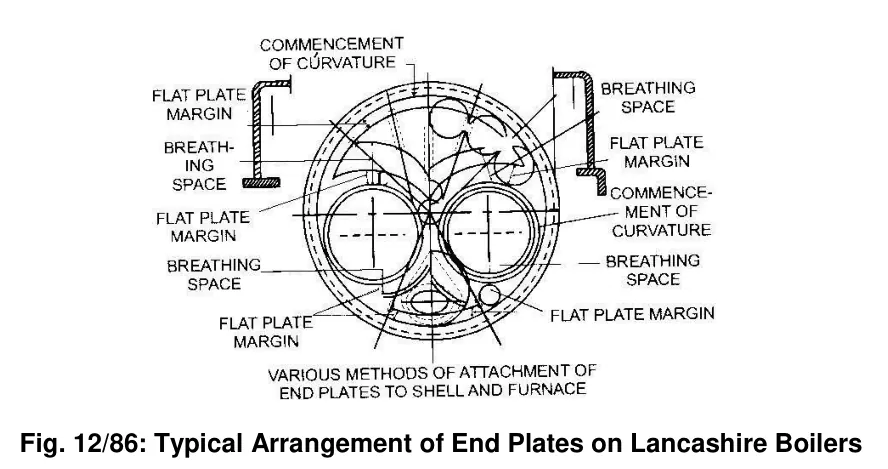
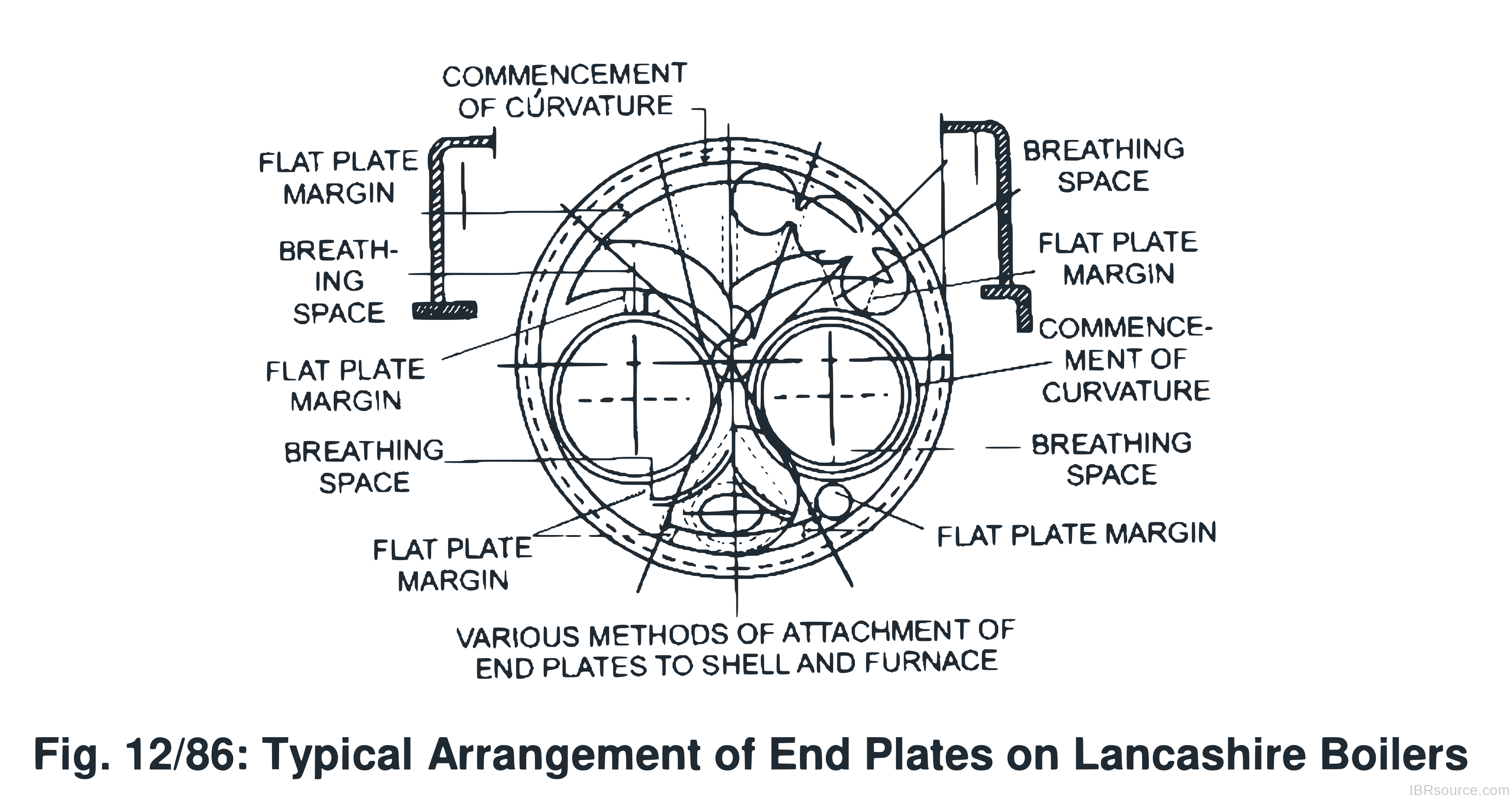
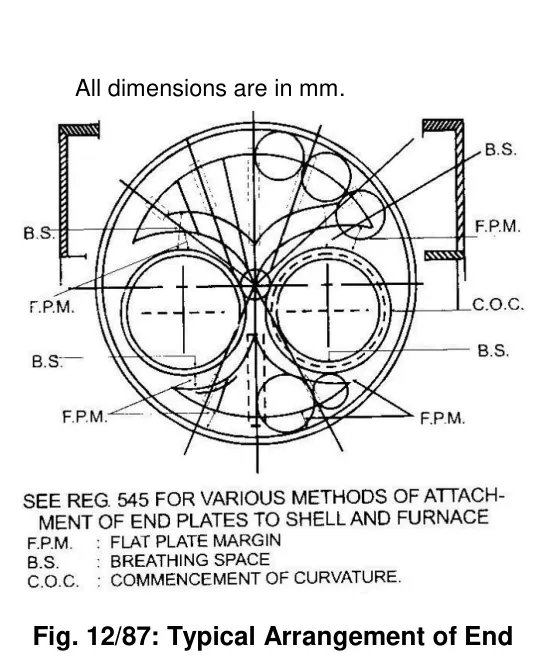
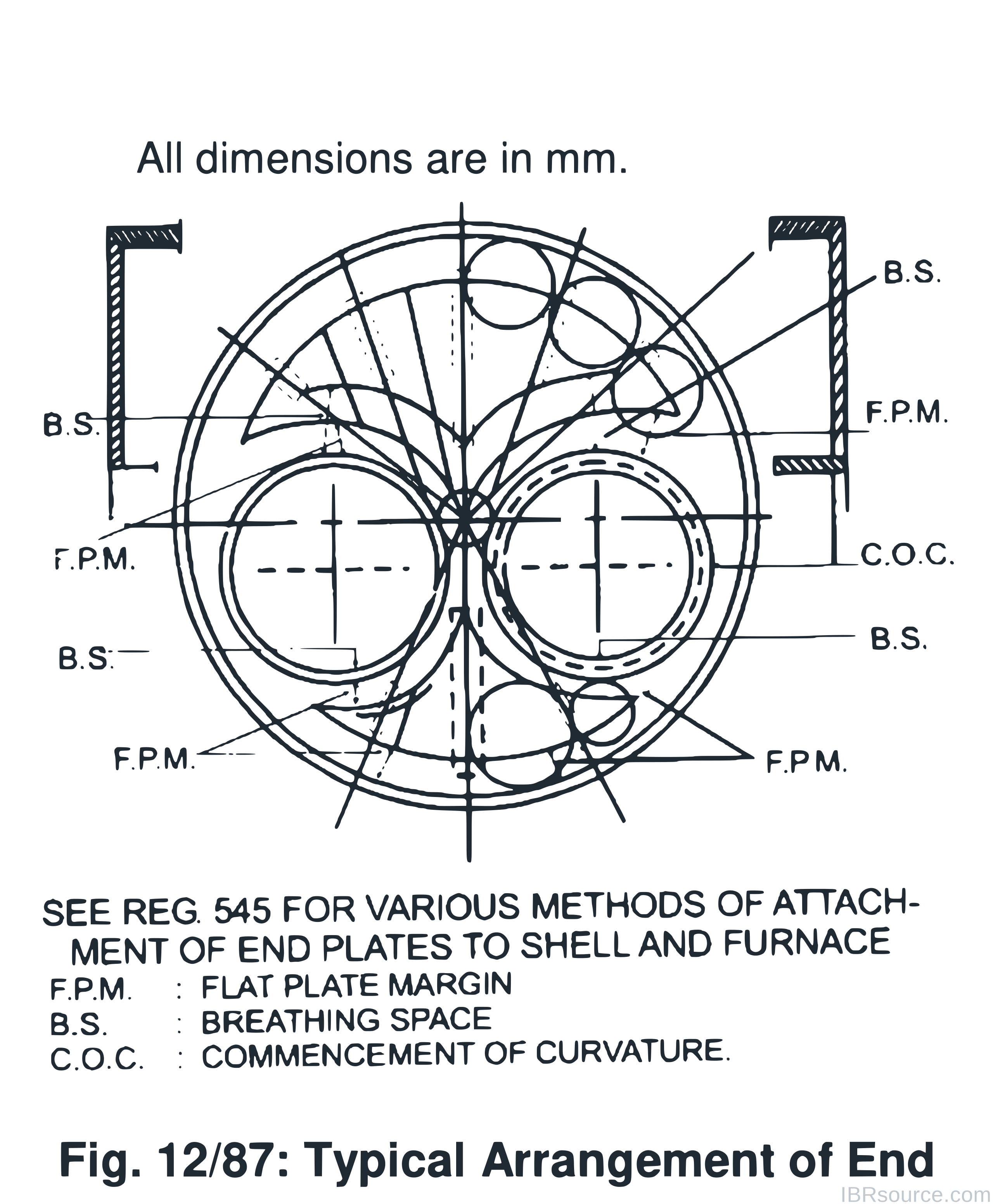
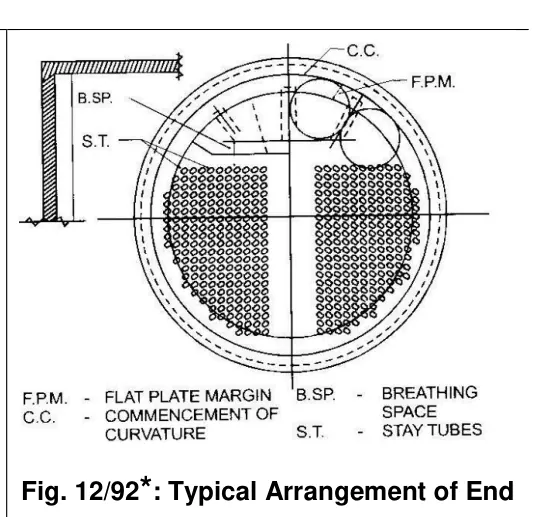
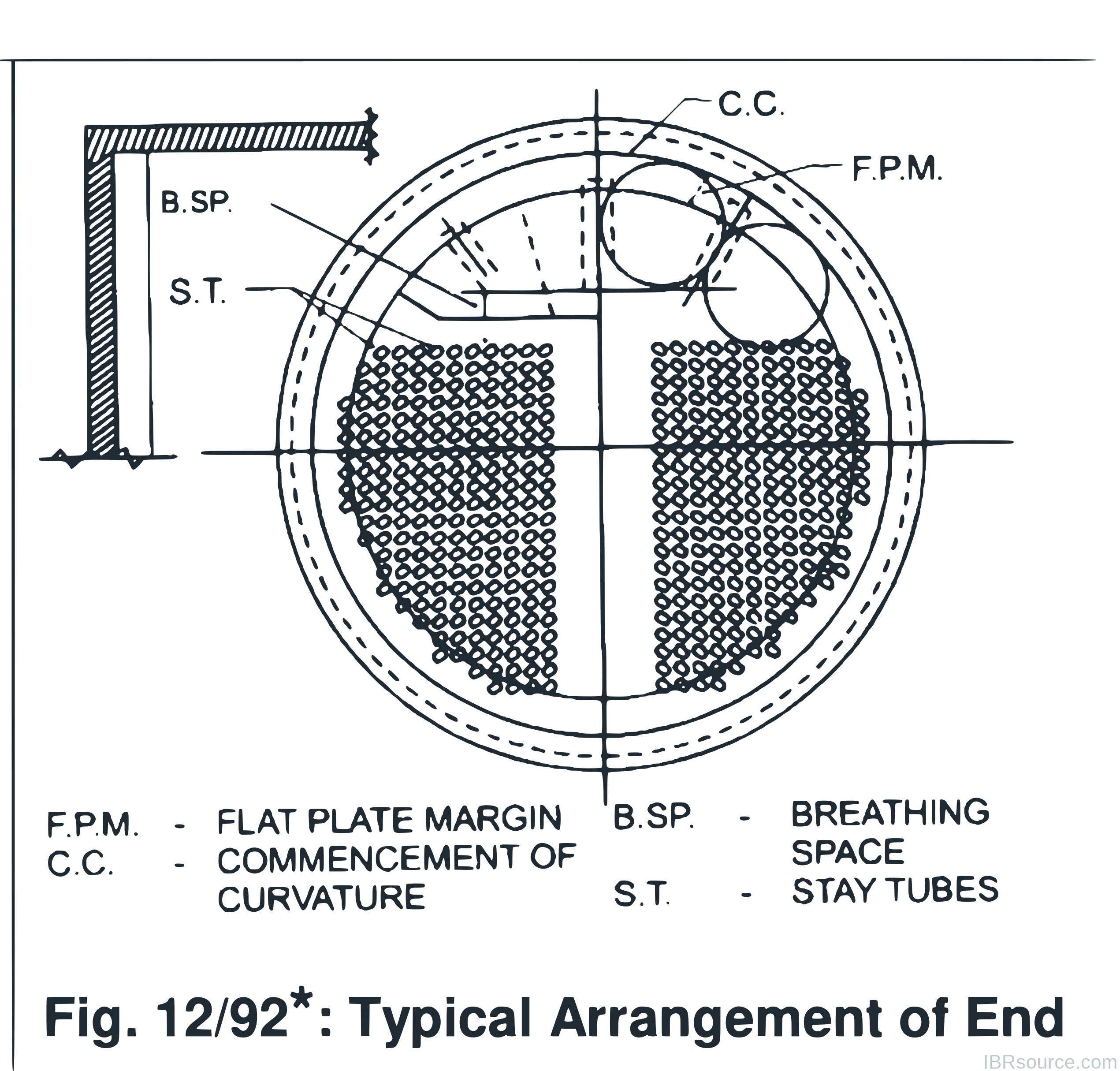
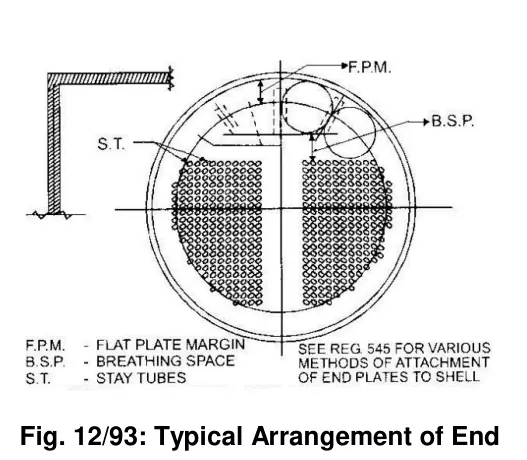
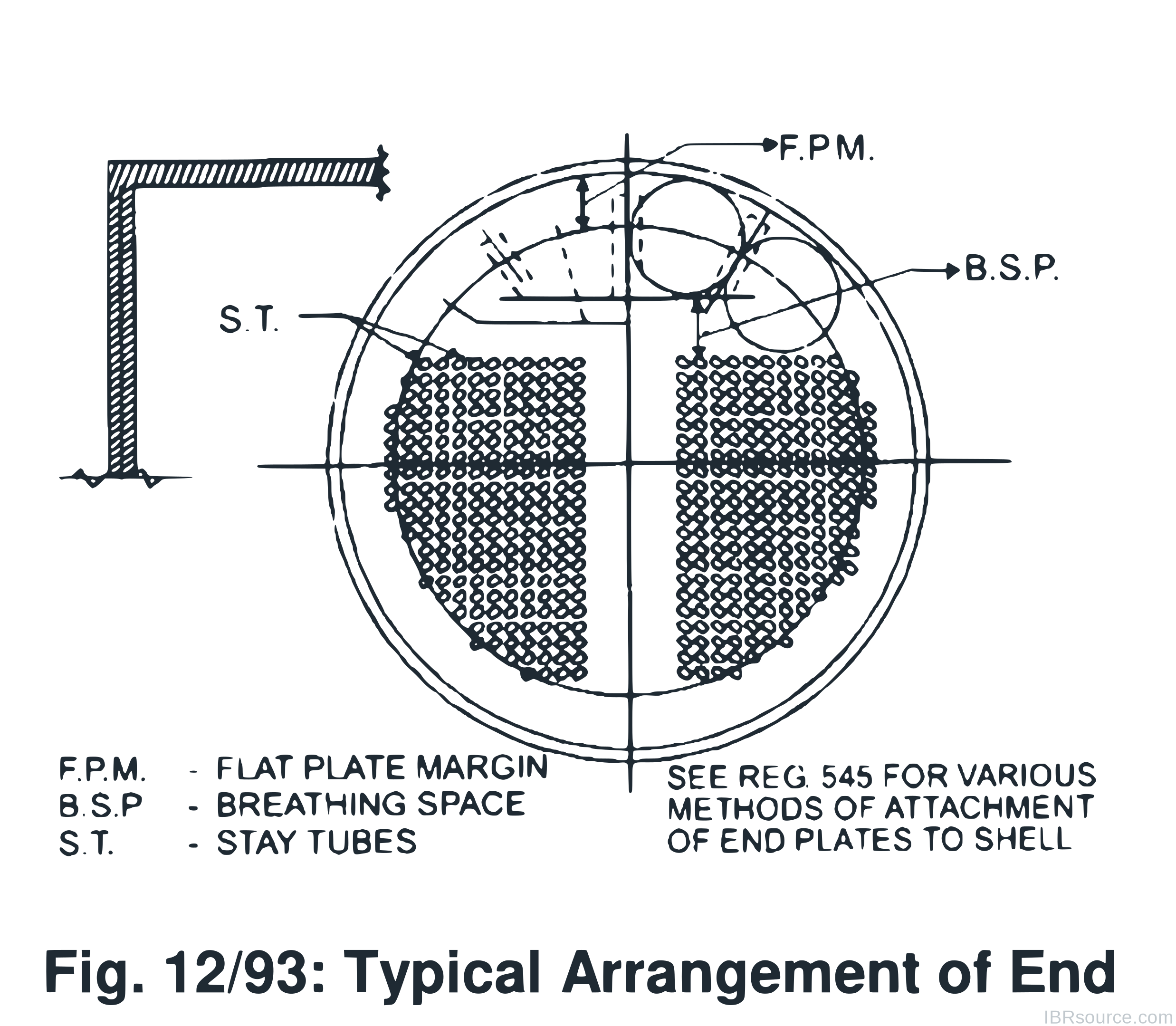
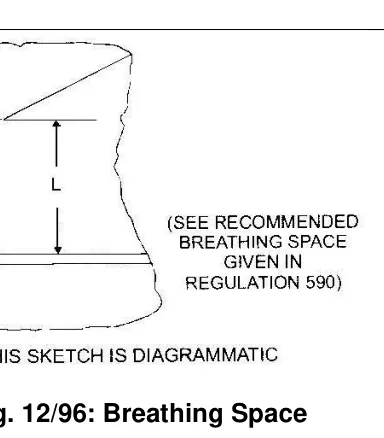
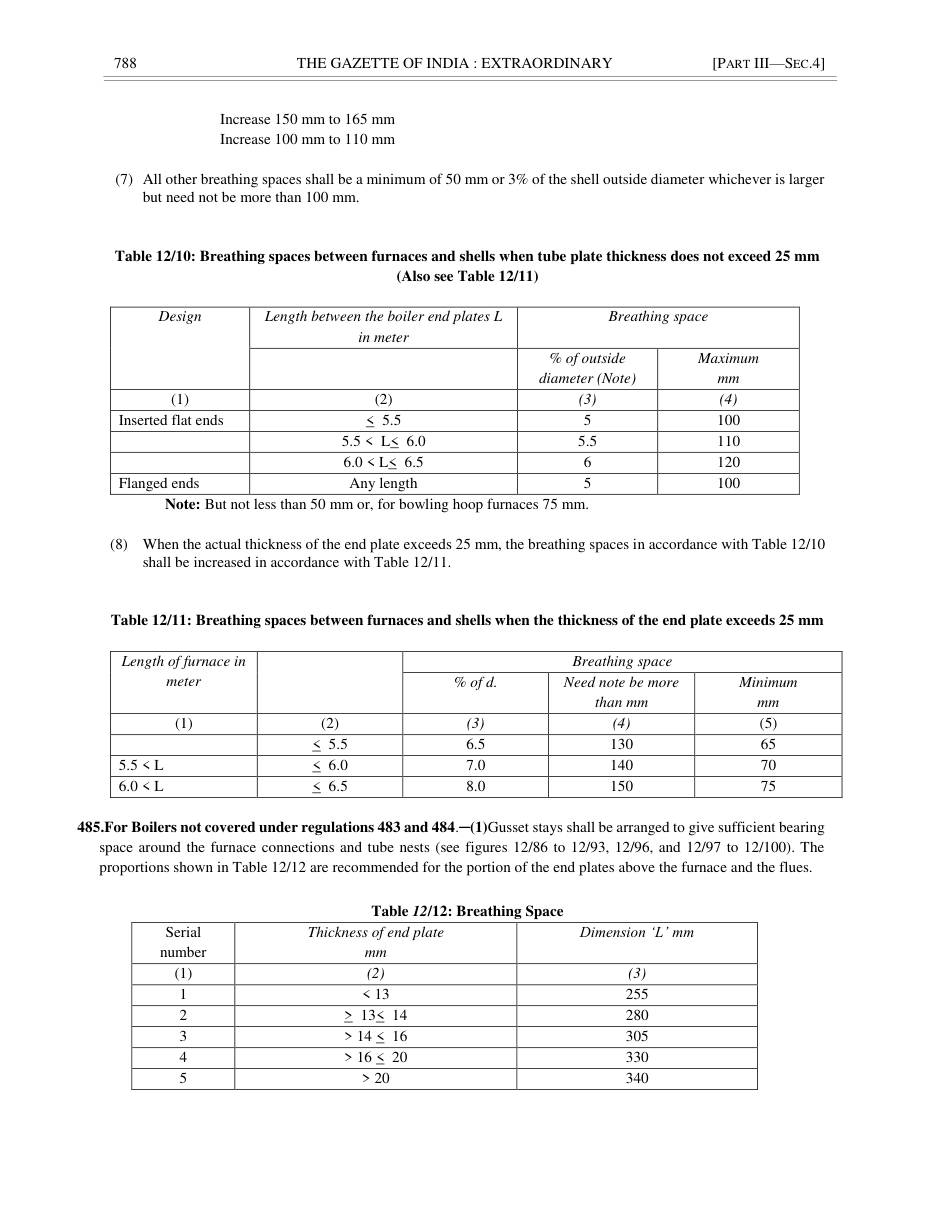
485.For Boilers not covered under regulations 483 and 484.─(1)Gusset stays shall be arranged to give sufficient bearing space around the furnace connections and tube nests (see figures 12/86 to 12/93, 12/96, and 12/97 to 12/100). The proportions shown in Table 12/12 are recommended for the portion of the end plates above the furnace and the flues.
Serial Table 12/12: Breathing Space Dimension ‘L’ mm
| Serial number | Thickness of end plate mm | Dimension ‘L’ mm |
|---|---|---|
| (1) | (2) | (3) |
| 1 | < 13 | 255 |
| 2 | > 13< 14 | 280 |
| 3 | > 14 < 16 | 305 |
| 4 | > 16 < 20 | 330 |
| 5 | > 20 | 340 |
Table structure read from the Gazette PDF, page 788. Verification status as for the text above.
Show original extracted text (diagnostic, not authoritative)
number           Thickness of end plate
                                                                    (3)
  (1)                       mm                                      255
   1                        (2)                                     280
   2                       < 13                                     305
   3                    > 13< 14                                    330
   4                    > 14 < 16                                   340
   5                    > 16 < 20
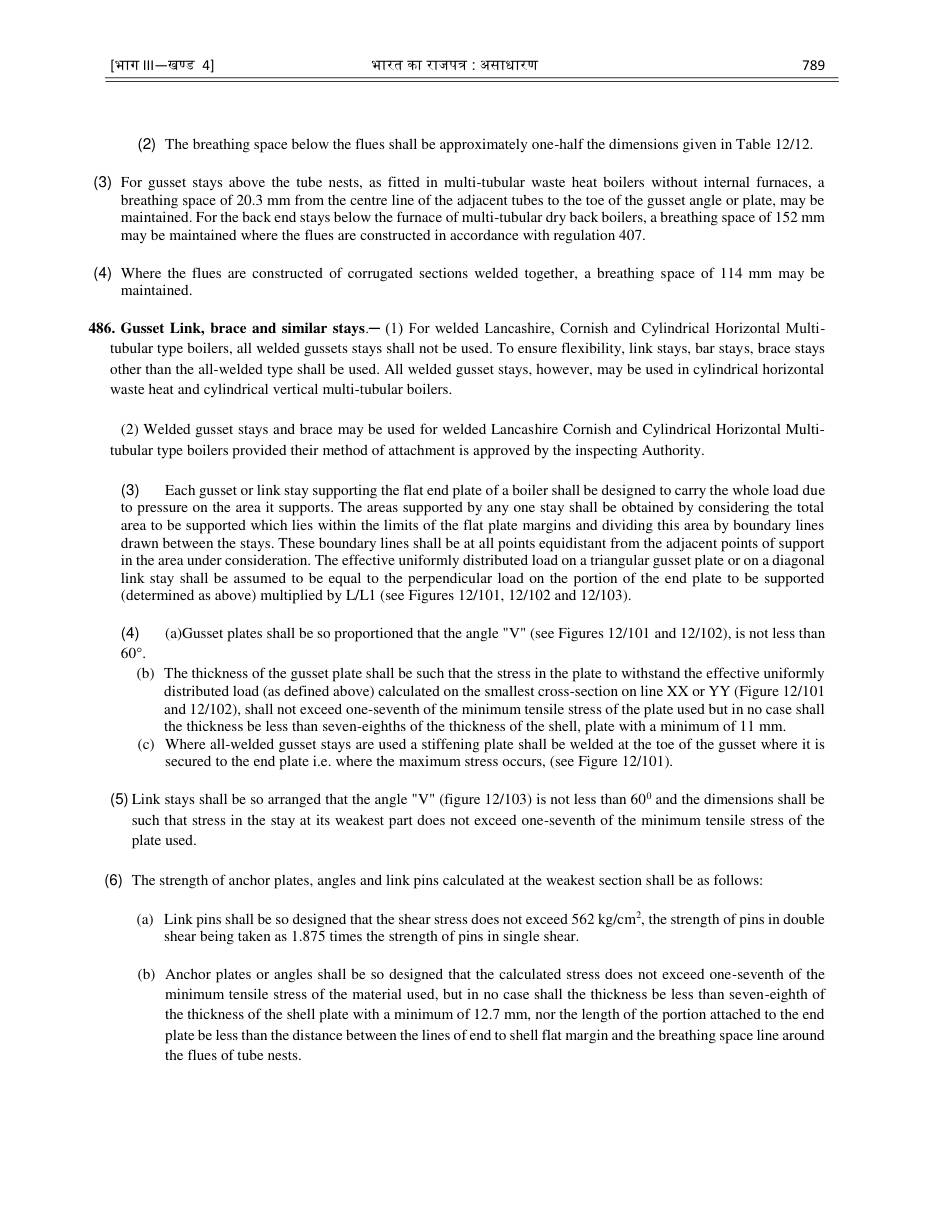
> 20(2)The breathing space below the flues shall be approximately one-half the dimensions given in Table 12/12.
(3)For gusset stays above the tube nests, as fitted in multi-tubular waste heat boilers without internal furnaces, a breathing space of 20.3 mm from the centre line of the adjacent tubes to the toe of the gusset angle or plate, may be maintained. For the back end stays below the furnace of multi-tubular dry back boilers, a breathing space of 152 mm may be maintained where the flues are constructed in accordance with regulation 407.
(4)Where the flues are constructed of corrugated sections welded together, a breathing space of 114 mm may be maintained.
Parts of this extracted text look garbled; read the Gazette page before using any value.
Tables and formulae are shown in their extracted layout. Alignment, superscripts and subscripts may be lost. The Gazette page image is authoritative.
Figures cited in this regulation (9, exact crops of the Gazette)
View Gazette page 822 · figure catalogue
Auto-traced outline: SVG · DXF (not to scale, may copy print defects)
View Gazette page 823 · figure catalogue
Auto-traced outline: SVG · DXF (not to scale, may copy print defects)
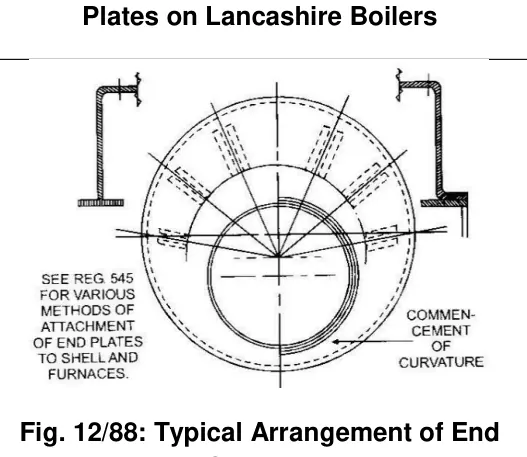
View Gazette page 823 · figure catalogue
Auto-traced outline: SVG · DXF (not to scale, may copy print defects)
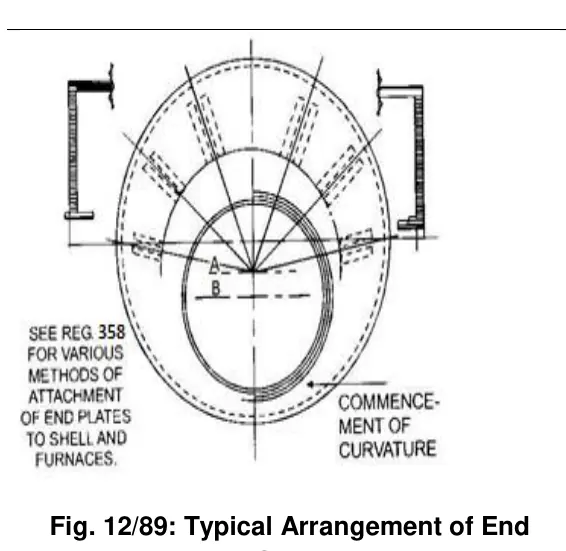
View Gazette page 824 · figure catalogue
Auto-traced outline: SVG · DXF (not to scale, may copy print defects)
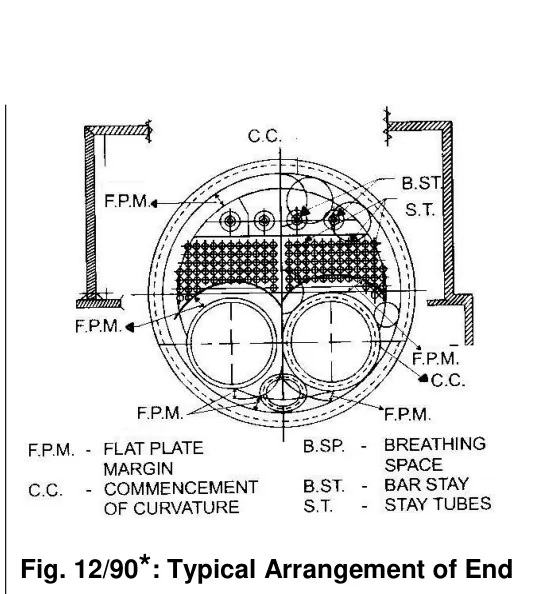
View Gazette page 823 · figure catalogue
Auto-traced outline: SVG · DXF (not to scale, may copy print defects)
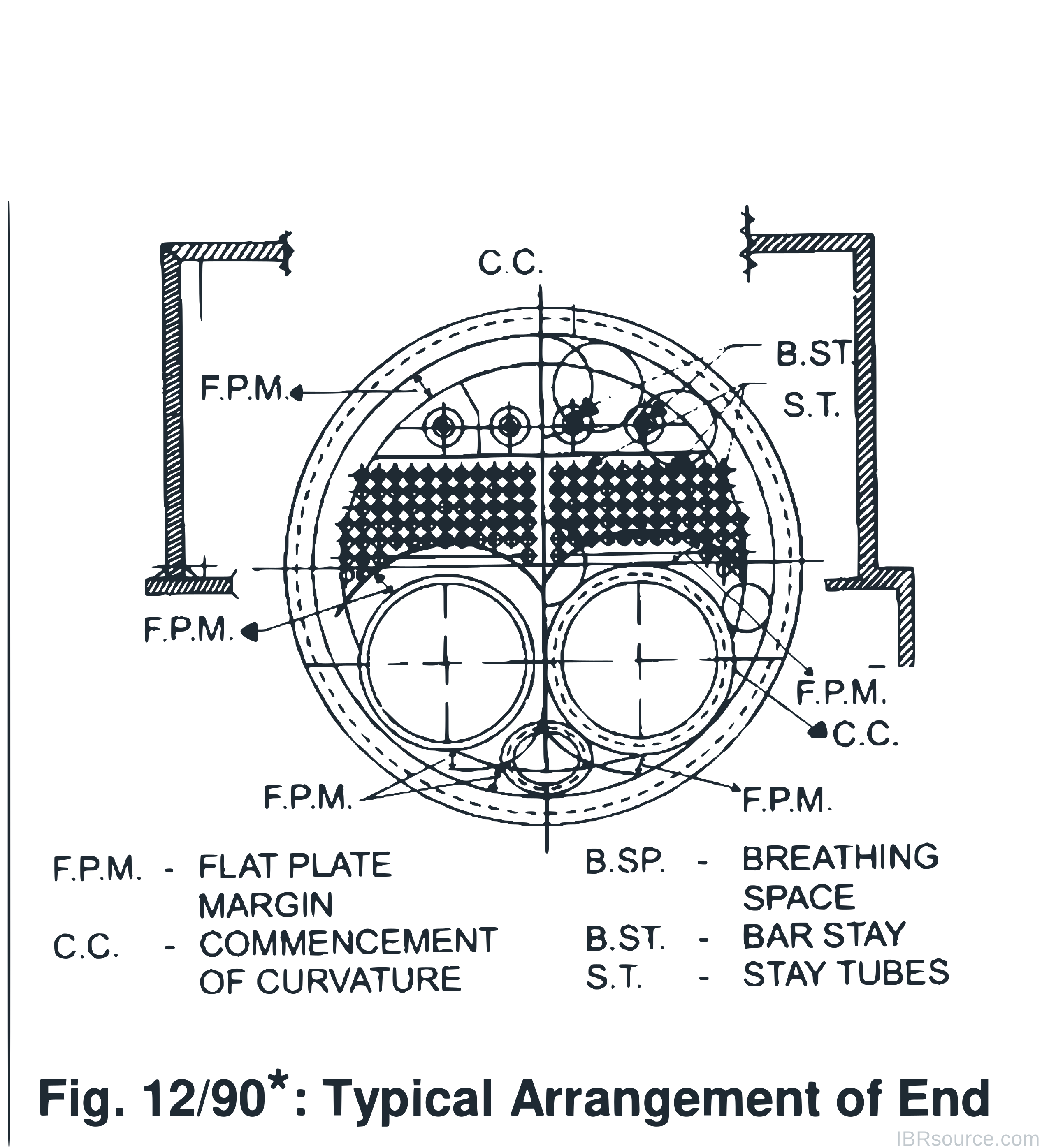
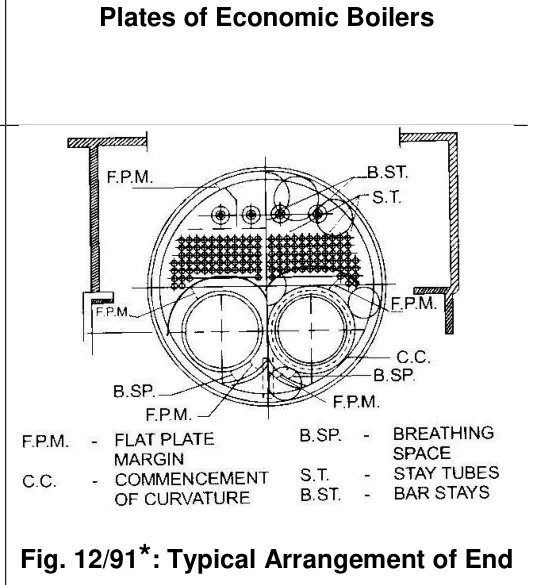
View Gazette page 823 · figure catalogue
Auto-traced outline: SVG · DXF (not to scale, may copy print defects)
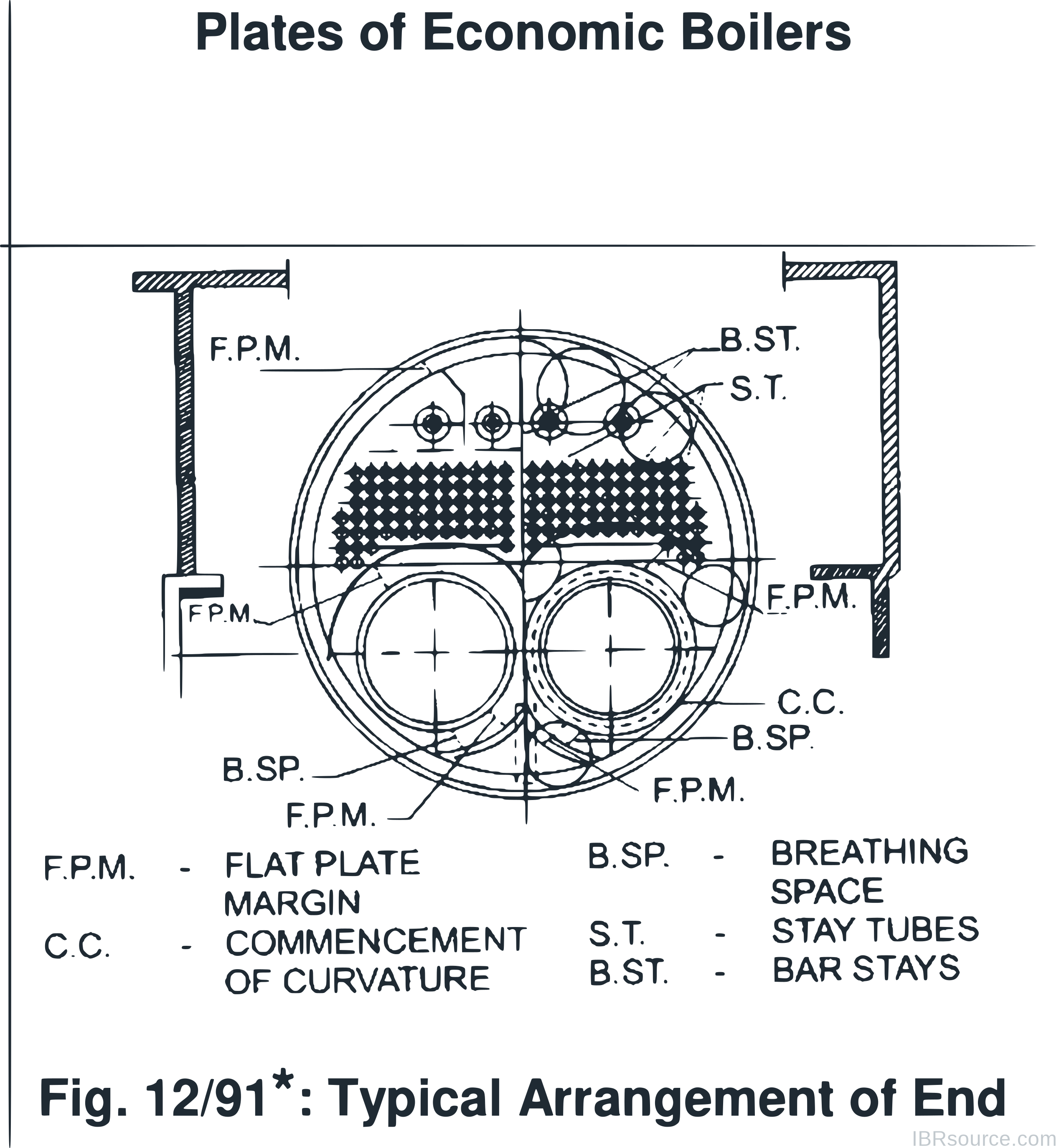
View Gazette page 824 · figure catalogue
Auto-traced outline: SVG · DXF (not to scale, may copy print defects)
View Gazette page 825 · figure catalogue
Auto-traced outline: SVG · DXF (not to scale, may copy print defects)
View Gazette page 826 · figure catalogue
Auto-traced outline: SVG · DXF (not to scale, may copy print defects)
In short
Regulation 485 covers breathing spaces for boilers not covered by regulation 483 or regulation 484. Gusset stays must leave sufficient space around furnace connections and tube nests.
Key points
- (1) Table 12/12 gives recommended breathing space dimensions L for the part of the end plates above the furnace and flues, by end plate thickness.
- (2) Below the flues, the breathing space is to be about one-half of the Table 12/12 dimensions.
- (3) Multi-tubular waste heat boilers without internal furnaces: for gusset stays above the tube nests, a space of 20.3 mm from the centre line of the adjacent tubes to the toe of the gusset angle or plate may be kept.
- (3) Multi-tubular dry back boilers: for back end stays below the furnace, a space of 152 mm may be kept where the flues are built to regulation 407.
- (4) Where flues are made of corrugated sections welded together, a space of 114 mm may be kept.
Watch out
- Table 12/12 did not extract cleanly. Check the Gazette page for the exact thickness bands and values.
Written by IBRsource editors · last edited 2026-11-20. Explanations simplify and are not a design method, testing procedure or authorisation. Requirements come from the complete regulations, the Gazette and approved documentation.
Comparison pending: the IBR 1950 text in force on 30 September 2026 is not yet established for this provision, so no change is claimed (how this works).
Orientation hints (unverified)
These candidates come from automated heading matching against DPIIT's scanned historical print edition of IBR 1950. That edition uses imperial units and riveted-construction provisions, so it is not the operative 2026 predecessor text. Regulation numbers alone never prove equivalence.
No candidate heading found in the historical print edition.
Images of the official Gazette pages that contain this regulation. Click to zoom. Compare word by word before relying on the extracted text.
Indian Boiler Regulations, 2026, reg. 485, Regulation 485, Gazette of India, Extraordinary, Part III—Section 4, No. 596, 1 October 2026, printed p.788–789. https://egazette.gov.in/WriteReadData/2026/276813.pdf (text consulted via IBRsource, 2026-11-23).
The citation refers to the government publication. Cite the Gazette, not this website.