
Indian Boiler Regulations, 2026 · Chapter 12 · Shell Type Boilers of Welded Construction
Regulation 408. Uptakes
Not yet checked against the official Gazette; verify before relying on it.
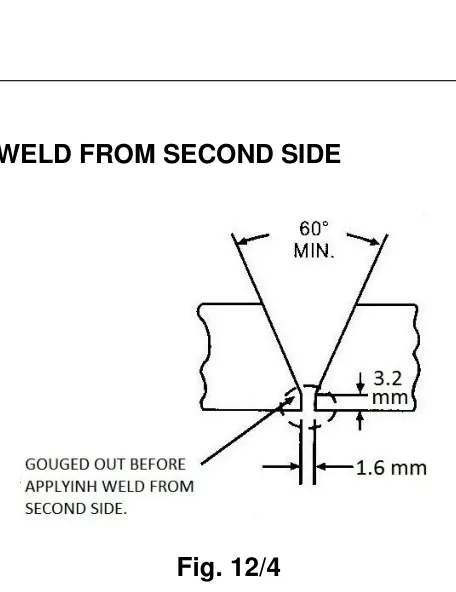
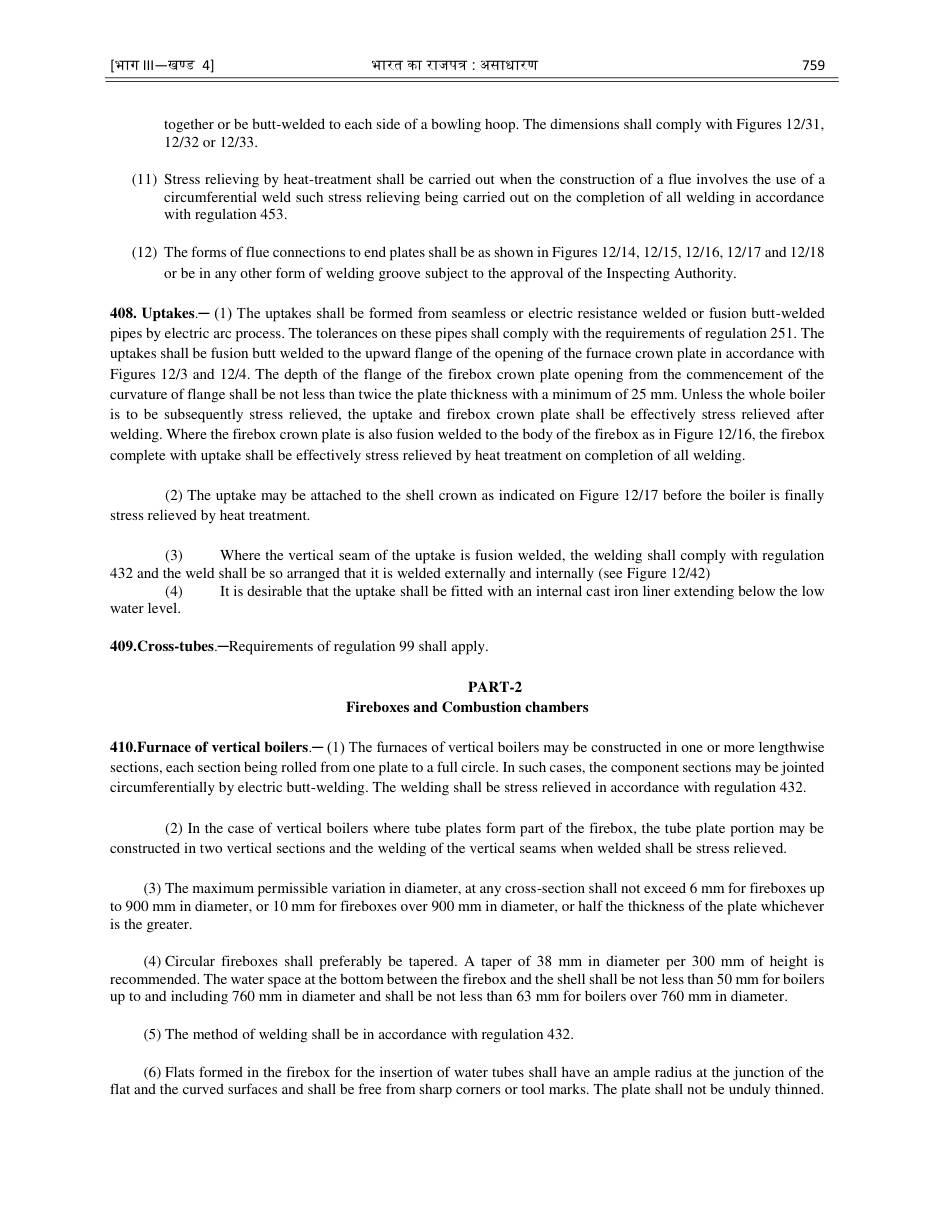
408. Uptakes.─ (1) The uptakes shall be formed from seamless or electric resistance welded or fusion butt-welded pipes by electric arc process. The tolerances on these pipes shall comply with the requirements of regulation 251. The uptakes shall be fusion butt welded to the upward flange of the opening of the furnace crown plate in accordance with
Figures 12/3 and 12/4. The depth of the flange of the firebox crown plate opening from the commencement of the curvature of flange shall be not less than twice the plate thickness with a minimum of 25 mm. Unless the whole boiler is to be subsequently stress relieved, the uptake and firebox crown plate shall be effectively stress relieved after welding. Where the firebox crown plate is also fusion welded to the body of the firebox as in Figure 12/16, the firebox complete with uptake shall be effectively stress relieved by heat treatment on completion of all welding.
(2)The uptake may be attached to the shell crown as indicated on Figure 12/17 before the boiler is finally stress relieved by heat treatment.
(3)Where the vertical seam of the uptake is fusion welded, the welding shall comply with regulation 432 and the weld shall be so arranged that it is welded externally and internally (see Figure 12/42)
(4)It is desirable that the uptake shall be fitted with an internal cast iron liner extending below the low water level.
Figures cited in this regulation (4, exact crops of the Gazette)
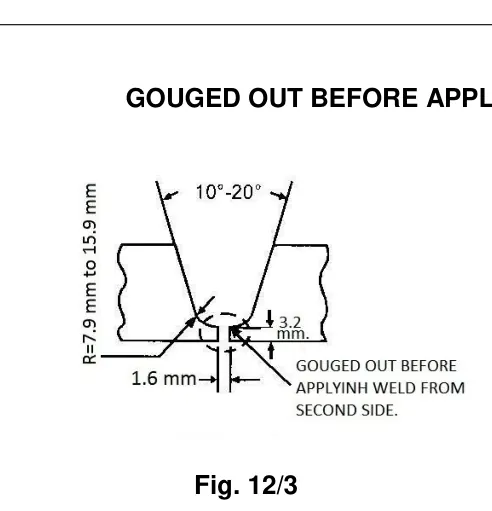
View Gazette page 798 · figure catalogue
Reconstructed CAD: DXF · SVG · Preview (redrawn, checked against the print; technical review pending)
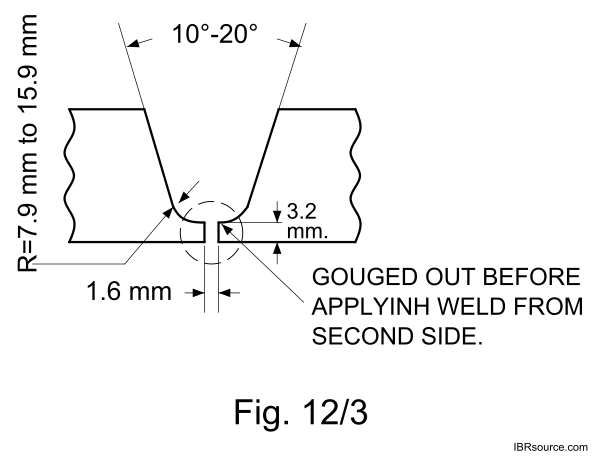
View Gazette page 798 · figure catalogue
Reconstructed CAD: DXF · SVG · Preview (redrawn, checked against the print; technical review pending)
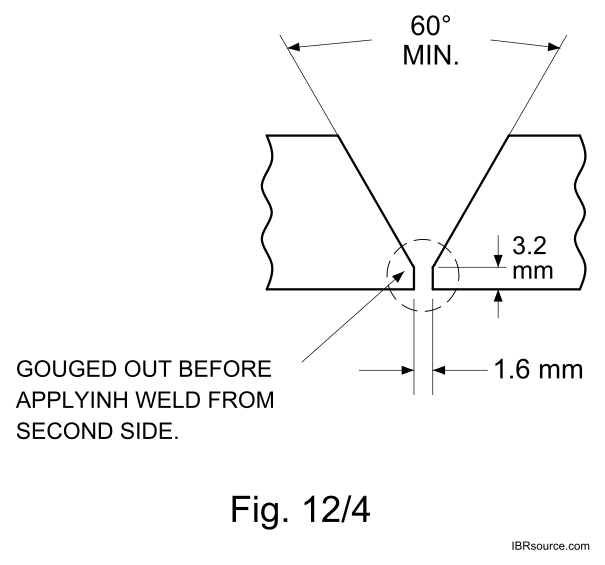
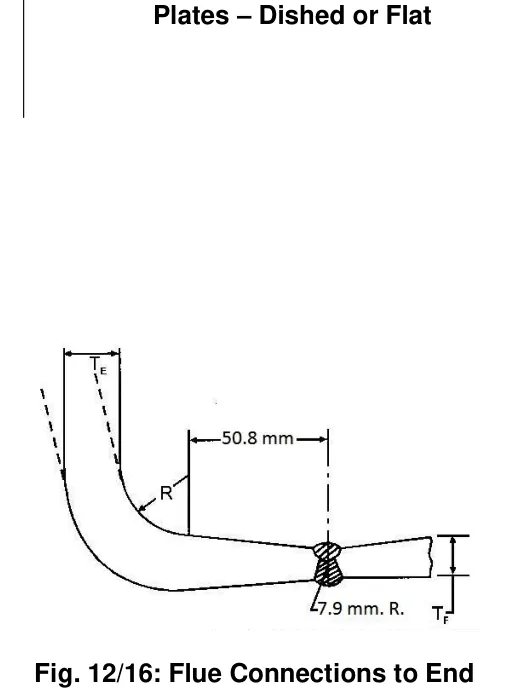
View Gazette page 800 · figure catalogue
Auto-traced outline: SVG · DXF (not to scale, may copy print defects)
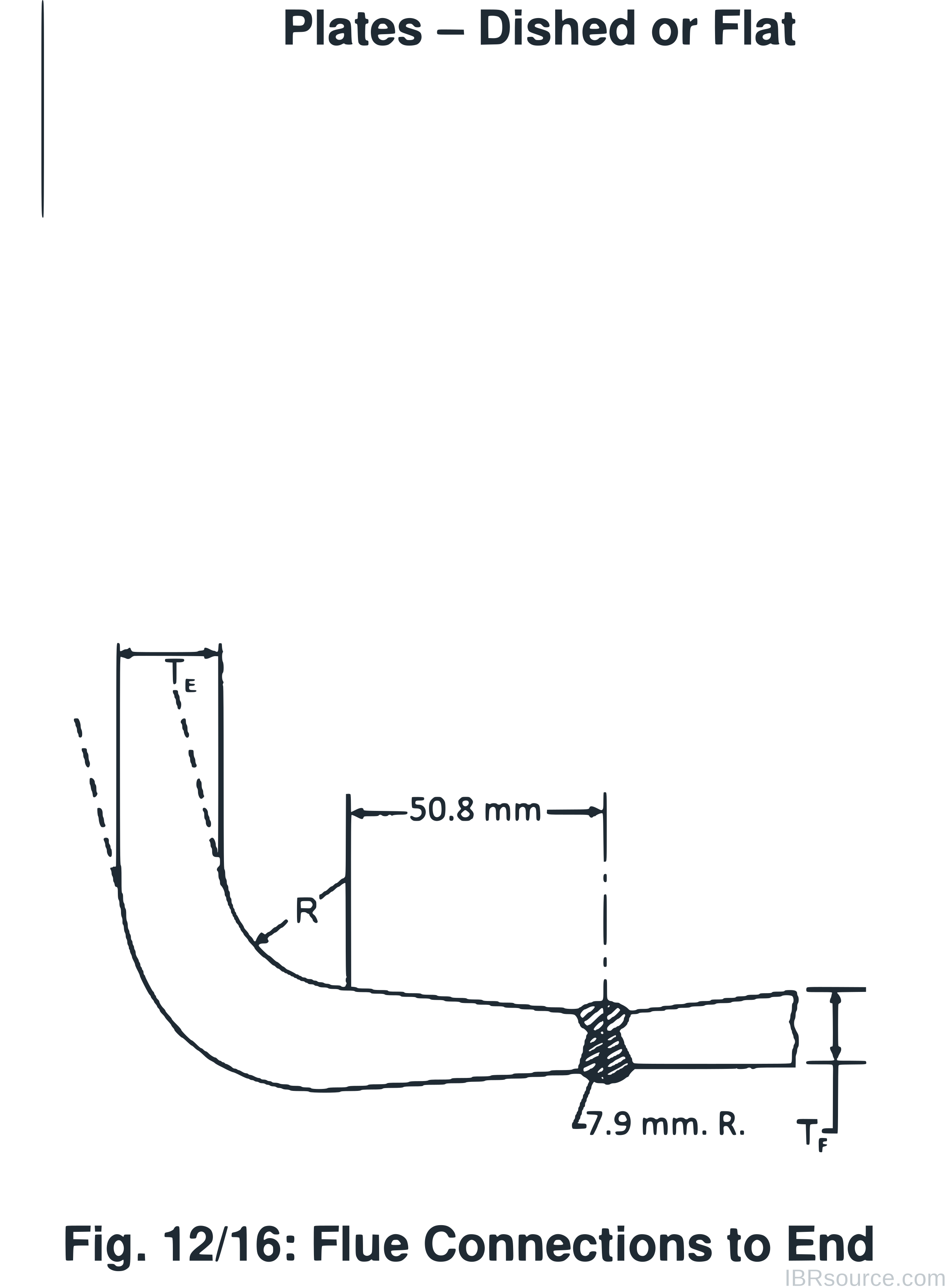
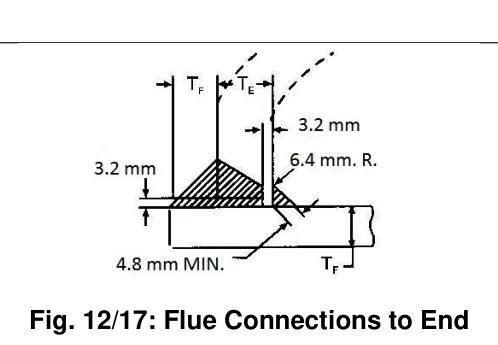
View Gazette page 801 · figure catalogue
Auto-traced outline: SVG · DXF (not to scale, may copy print defects)
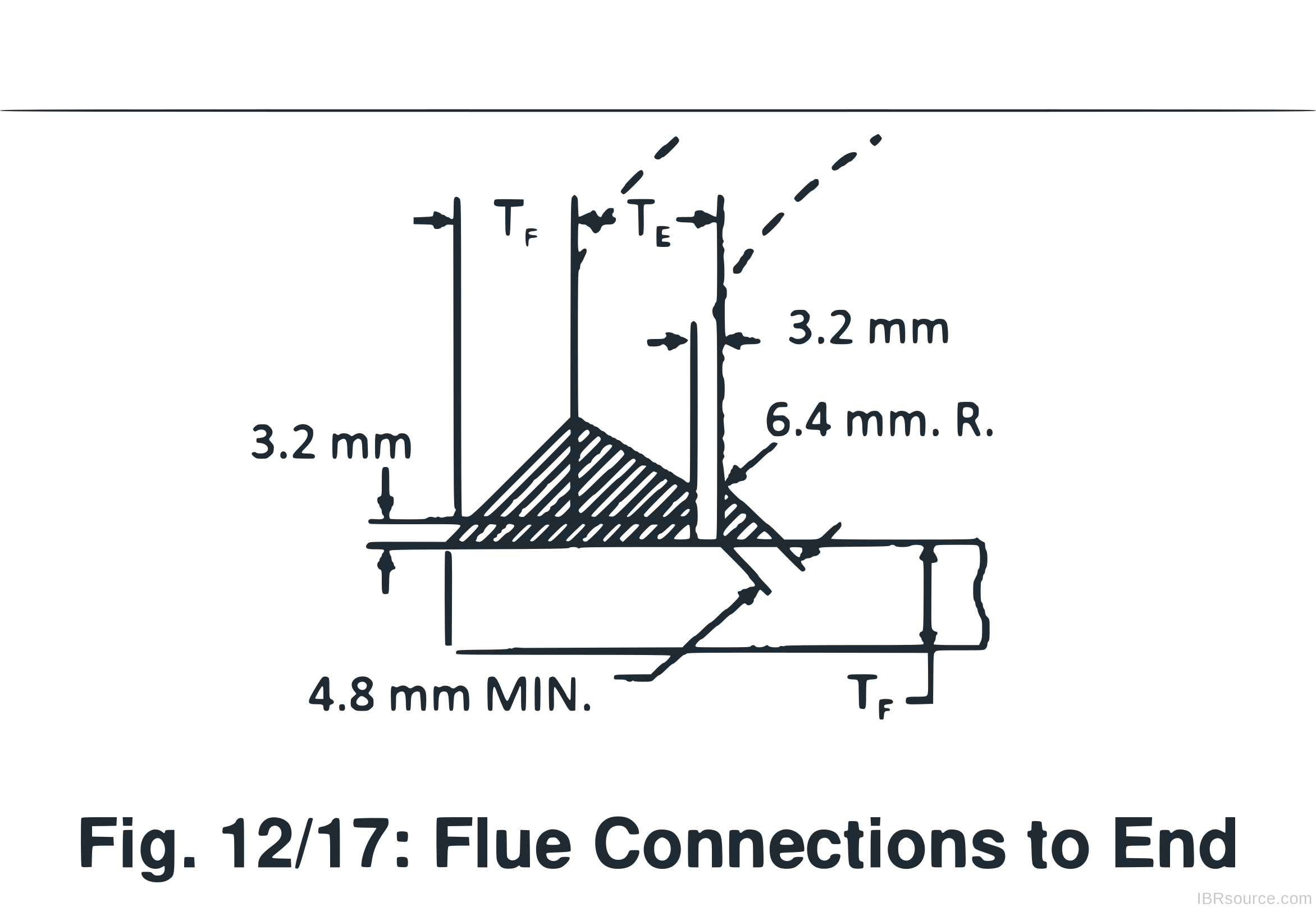
In short
Regulation 408 sets how uptakes in welded vertical boilers are made, attached and stress relieved.
Key points
- (1) Uptakes are formed from seamless, electric resistance welded, or fusion butt-welded pipes by the electric arc process, with tolerances as per regulation 251.
- (1) The uptake is fusion butt welded to the upward flange of the furnace crown plate opening. The flange depth, from where its curvature starts, must be at least twice the plate thickness, with a minimum of 25 mm.
- (2) The uptake may be attached to the shell crown before the boiler is finally stress relieved by heat treatment.
- (3) A fusion welded vertical seam in the uptake must meet regulation 432 and be welded externally and internally.
- (4) An internal cast iron liner extending below the low water level is desirable, not mandatory.
Watch out
- Unless the whole boiler will be stress relieved later, the uptake and firebox crown plate must be stress relieved after welding. Where the crown plate is also fusion welded to the firebox body, the complete firebox with uptake is stress relieved by heat treatment after all welding.
Written by IBRsource editors · last edited 2026-11-20. Explanations simplify and are not a design method, testing procedure or authorisation. Requirements come from the complete regulations, the Gazette and approved documentation.
Comparison pending: the IBR 1950 text in force on 30 September 2026 is not yet established for this provision, so no change is claimed (how this works).
Orientation hints (unverified)
These candidates come from automated heading matching against DPIIT's scanned historical print edition of IBR 1950. That edition uses imperial units and riveted-construction provisions, so it is not the operative 2026 predecessor text. Regulation numbers alone never prove equivalence.
No candidate heading found in the historical print edition.
Images of the official Gazette pages that contain this regulation. Click to zoom. Compare word by word before relying on the extracted text.
Indian Boiler Regulations, 2026, reg. 408, Regulation 408, Gazette of India, Extraordinary, Part III—Section 4, No. 596, 1 October 2026, printed p.759. https://egazette.gov.in/WriteReadData/2026/276813.pdf (text consulted via IBRsource, 2026-11-23).
The citation refers to the government publication. Cite the Gazette, not this website.